Hawk Ridge Fabrics and Crafts
Amorphophallus konjac unique, exotic gift 1 plant/bulb
Amorphophallus konjac unique, exotic gift 1 plant/bulb
Couldn't load pickup availability
Bulbs will be shipped in the end of Sept. or early Oct.
Amorphophallus konjac is generally grown as a curiosity for its interesting foliage. Native to warm subtropical to tropical areas of eastern Asia, including Vietnam, Japan and China south to Indonesia, Amorphophallus konjac has been known by several other scientific names as well as numerous common names including Devil’s tongue, dragon plant, elephant yam, konnyku, leopard arum, snake palm and umbrella arum (and some of the common names also refer to other species of arums). The leaf stalk is mottled pinkish gray and olive green.
This plant produces a single leaf from a subterranean tuber. The globose tuber can grow up to 50 pounds and a foot in diameter. The tuber shrinks away as the new leaf grows and during the growing season a new, larger tuber replaces it. The fleshy leaf stalk is a very interesting mottled pinkish-gray and olive green. The single intricate leaf consists of a horizontal blade on the vertical petiole which is divided into three sections, giving an umbrella-like effect. The leaf blade is deeply dissected and divided into numerous small leaflets. The petiole has multiple branches, so that large specimens resemble a small tree.
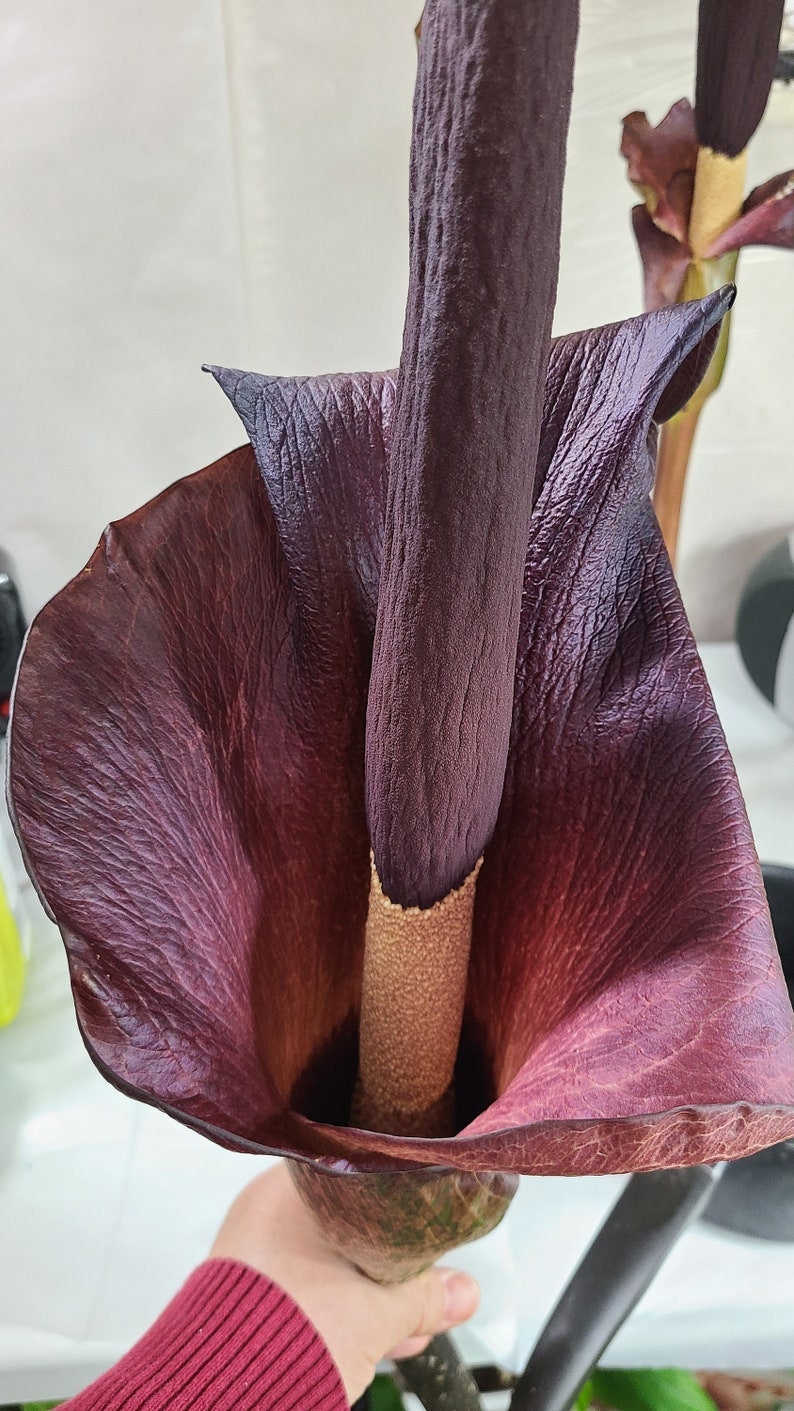
The size of the leaf is related to the size of the tuber, so the bigger the tuber, the bigger the leaf will grow, up to 4 feet across. Will reproduce readily from offshoots. Plants can grow up to 4-6 feet tall. Even in tropical climates the plant requires a dry, dormant rest period in winter every year. The leaf only lasts for one growing season and will naturally senesce in late summer or fall. You may dig the bulb up in the fall, and leave them in a cool dry place, bare bulb, and wait for it to bloom in early spring if the bulb is large enough. They send up an amazing up to 3 feet tall inflorescence from just that bare bulb. When in bloom it produces an odor like a dead animal, the smell intended to attract the carrion flies that are its natural pollinators. If this is objectionable the flower can be cut off or covered with a plastic bag to confine the smell. Pollinated flowers will be followed by a globose berry, although this is rare in home-grown plants. It may be a month or more before the leaf emerges after flowering.
Plant care
As a tender plant, the leaf is very frost sensitive (although buried tubers are supposedly hardy to zone 6), and must be grown indoors as a house plant or as a seasonal outdoor plant.
Once the flower has faded, watch for the emerging roots growing on top of tuber, and you may pot it up or plant it in the ground in warm areas. The tubers should be placed deeply below the surface – approximately as far below the soil surface as the tuber is wide. The container should be at least twice the diameter of the tuber that is planted to accommodate the spreading roots. It is often better to start the tubers indoors and move them outside once nighttime temperatures remain above 55ºF. They can be transplanted into the ground, be sunk in the container into the ground up to the rim, or be kept in containers on a patio or deck.
The plant grows well in a location with dappled sun and moist, well-draining soils in Zones 7-10. Good drainage is especially important in the winter, as cool, wet soils can encourage rot. This plant can also be grown in a container. No serious insect pests or diseases reported. Poorly drained soil can lead to overall decline.
It is a heavy feeder, and can be fertilized heavily through the growing season. The growing medium should be allowed to dry and no more fertilizer provided in the late summer or fall when the leaf begins to senesce. Containers outside should be tipped over to allow them to dry out completely. Do not cut off the leaf until is completely brown.
This plant prefers warm temperatures between 60°F and more but cannot grow in gardens where frost is present. So, you will need to dig up the bulb and bring it indoor for overwintering, and then watch it bloom in early spring when the bulb is big enough. During the winter rest period the tuber can remain in its pot in the dry growing medium or can be removed from the growing medium and stored in peat moss. It is often recommended to wait until spring to separate any small new tubers from the parent. In any case, the tubers should be kept on the dry side so they won’t rot, in fairly warm conditions (42-50F).
Note: Although I did my best to pack the plant, I cannot guarantee the safe delivery of the plant once it is out of my hand. Please make sure to track the delivery and receive the plant on time. Once delivered, it is the customer's responsibility to help them thrive. If the plant arrives damaged, please immediately contact me and send me pictures to show the damage, so that we may work out a way for you. Breaking a few leaves or even branches during transition won't affect the plant much and it will recover very soon.
Share